UNM Stuttering Lab
People
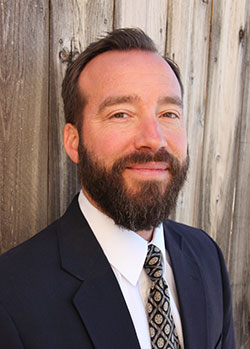
Students
- Sil Zeir
Topics Studied
The research being done in the UNM Stuttering Lab touches upon several areas of developmental stuttering. Our mission is to better understand the subjective experience of stuttering in order to better guide positive change for people who stuttter. Some of the topics we are studying include the anticipation of stuttering and the contextual variability of stuttering. Recently our research has transitioned toward the way people relate to their stuttering and how it plays a role in their personal narrative. Using qualitative methods, we are investigating how people who stutter change their thoughts and beliefs to live harmoniously with stuttering.
Current Projects
The experience of being a parent of a child who stutters and subsequent involvement in support groups
We are recruiting parents of children who stutter who have also particpated in stuttering support groups. Click here for a flier with more study details.
Phenomenological investigation of the contextual variability and anticipation of stuttering
We are recruiting adults who stutter to describe their experiences with stuttering. Click here for a flier with more study details.
If you are interested in participating in any of the studies in our lab please email stuttering@unm.edu or call 319-936-1287.
Selected Publications
Ortiz-Alvarez, A., & Arenas, R. (2025). A phenomenological exploration of the contextual variability of stuttering. Journal of Fluency Disorders. https://doi.org/10.1016/j.jfludis.2025.106120
Warner, H., Shroff, R., Zuanazzi, A., Arenas, R., & Jackson, E. (2023). Linguistic Features of Stuttering During Spontaneous Speech. Journal of Fluency Disorders, https://doi.org/10.1016/j.jfludis.2023.106016
Neel, A., Mizusawa, C., Do, Q., & Arenas, R. (2023). Reduced duration of stuttering-like disfluencies and consistent anticipatory slowing during an adaptation task. International Journal of Language & Communication Disorders, n/a(n/a). https://doi.org/10.1111/1460-6984.12930
Neel, A., Krasilshchikova, S., Richardson, J., Arenas, R., Bennett, L., Banks, A., and Bernick. C. (2023) Articulation rate, pauses, and disfluencies in professional fighters: potential speech biomarkers for repeated head injury. Journal of Head Trauma Rehabilitation. https://doi.org/10.1097/HTR.0000000000000841
Arenas, R. M., Shoemaker, J., & Phillips, J. (2018). High prevalence of pineal cysts in adults who stutter. Brain and Language, 177-178, 18-22. https://doi.org/10.1016/j.bandl.2018.01.006
Arenas, R. M., Walker, E., & Oleson, J. (2017). Developmental stuttering in children who are hard of hearing. Language Speech and Hearing Services in Schools, 48(4), 234-248. http://doi.org/10.1044/2017_LSHSS-17-0028
Arenas, R. M. (2017). Conceptualizing and investigating the contextual variability of stuttering: The speech and monitoring interaction (SAMI) framework. Speech, Language and Hearing, 20(1), 15–28. https://doi.org/10.1080/2050571X.2016.1221877
Arenas, R. M., & Zebrowski, P. M. (2017). The relationship between stuttering anticipation and verbal response time in adults who stutter. Speech, Language and Hearing, 20(1), 1–14. https://doi.org/10.1080/2050571X.2016.1201346
Tumanova, V., Zebrowski, P. M., Goodman, S. S., & Arenas, R. M. (2015). Motor practice effects and sensorimotor integration in adults who stutter: Evidence from visuomotor tracking performance. Journal of Fluency Disorders, 45, 52–72. http://dx.doi.org/10.1016/j.jfludis.2015.04.001
Arenas, R. & Zebrowski, Z. (2013). The effects of autonomic arousal on speech production in adults who stutter: A preliminary study. Speech, Language and Hearing, 16:3, 176-185. http://dx.doi.org/10.1179/2050572813Y.0000000011
Arenas, R., Zebrowski, P., & Moon, J. (2012). Phonetically governed voicing onset and offset behavior in preschool children who stutter. Journal of Fluency Disorders, 37, 179-187. http://dx.doi.org/10.1016/j.jfludis.2012.04.001
Zebrowski, P. & Arenas, R. (2011). The “Iowa Way” revisited. Journal of Fluency Disorders, 36, 144-157.http://dx.doi.org/10.1016/j.jfludis.2010.08.001
Links and Resources
- The UNM Speech-Language Hearing Clinic which offers stuttering therapy to children, teenagers and adults.
- The Stuttering Foundation of America also a great resource for learning more about stuttering.
- The National Stuttering Association (NSA) is a self-help organization for people who stutter. At UNM, we have a local support group chapter of the NSA.
- FRIENDS is another national self-help organization specifically for children and teens who stutter.